

Categories

December 2009 Articles

  • Olivier Jankovec

    Renewed call for competitive crisis relief

    Fresh data for the third quarter of 2009 released by Eurostat, the EU’s statistical office, have confirmed expectations. With eurozone countries reporting a +0.4% growth compared with the previous three months, European recession is officially over. Although this is certainly good news for aviation, it cannot be taken for more than what it is: brighter light at the end of the tunnel.

  • “We have achieved very good results from the commercial activities in mp2, such as travel value retail, F&B and car hire,” said Regis. Average per passenger spend at mp2 is €1 less than at mp1, which has a higher proportion of business travellers with more propensity to spend.

    Low-cost terminal the growth engine for Marseille-Provence

    The airport of Marseille-Provence, France’s third busiest airport outside Paris, is a notable success story amidst the current economic climate. While accumulated passenger traffic across Europe declined by -7.7% for the first nine months of the year, Marseille-Provence airport saw a +3.9% increase to almost five million passengers. The development of mp2, the airport’s low-cost terminal, is largely responsible for this success, as Pierre Regis, CEO, explained to Ross Falconer.

  • Fabrizio Palenzona, Chairman, AdR: “Thanks to the rational attitude of the government, that vicious cycle for which airport charges remained unchanged for 10 years, with airport operators’ accounts further strained in the meantime by a number of inappropriate unjust taxes has been broken at last.”

    Progressive AdR-SEA collaboration to boost economic growth

    Two Italian airport operators, SEA Aeroporti di Milano and Aeroporti di Roma, share common strategy objectives, so collaboration was perhaps inevitable. The first step in their collaboration was the organisation of an event in Rome on 14 October, at which they presented their industrial and capital expenditure plans to the Italian Government. The overriding objective is to contribute to Italy’s economic growth, as Guiseppe Bonomi, President and CEO, SEA, and Fabrizio Palenzona, Chairman, AdR, explained to Ross Falconer.

  • Andrew Holding, community affairs manager, Birmingham International: “Our citizens need greater connectivity to realise the potential that lies in the region. Connectivity is how we see our role in driving the regional economy.”

    Europe’s airports key engines to restore economic growth

    The ACI EUROPE Small and Medium Size Airports Action Group (SMAG) held a regional airports workshop on 6 October as part of the ‘OPEN DAYS: European Week of Regions and Cities’ jointly organised by the EU Committee of the Regions and the European Commission Directorate-General for Regional Policy. The Open Days are the EU’s biggest public forum on regional and development policy. Ross Falconer reports.

  • EASA is preparing the rules for the safety certification of aerodromes and their safety-oversight by the national aviation authorities (NAAs). Furthermore, EASA will provide rules and guidelines regarding aerodrome Safety Management Systems (SMS).

    EASA preparing aerodrome safety certification rules

    Starting with this issue of Airport Business, the European Aviation Safety Agency (EASA) will regularly inform readers about its new responsibilities in aerodrome safety. This first issue highlights the main elements of the Agency’s approach.

  • The fact that airports are businesses that are in competition with each other is a point emphasised by Gittens; very few airports in the world enjoy monopoly status. ACI WORLD would like to see ICAO less involved in economic regulation, so that the focus is on areas where there is a potential abuse of economic position.

    ACI WORLD calls for harmonised, global approach

    Airports Council International (ACI) counts around 600 members operating close to 1,700 airports worldwide and handling 96% of the world’s passenger traffic. Through the five ACI geographical regions – ACI EUROPE, ACI Africa, ACI Asia-Pacific, ACI-Latin America & Caribbean, ACI-NA (North America) – and ACI WORLD coordinating the global perspective, a strong, united voice safeguards the interests and influence of member airports. Ross Falconer spoke to Angela Gittens, Director General about ACI WORLD’s policy work with ICAO.

  • The first flight to arrive at the new Larnaka Airport was a Cyprus Airways service from Amman. As part of the Build-Operate-Transfer project, Cyprus Airways and easyJet were the first to transfer their services over to the new terminal on 10 November, with the remaining carriers following one week later.

    Hermes Airports consortium delivers two ‘world class’ airports in four years

    Three years ago, the Hermes Airports consortium took over operation of Cyprus’ two airports: Larnaka and Pafos. Last November the doors to Pafos’ new terminal were opened; an investment of €125 million and one year on, Cyprus is welcoming the completion of Larnaka’s new terminal.

  • The CUPPS technology is expected to provide significant savings to airports and airlines by introducing a uniform electronic interface for passenger applications.

    CUPPS to realise cost and time savings

    CUPPS (Common Use Passenger Processing System) is a true collaborative industry effort, bringing together airports, airlines and vendors. Replacing the existing CUTE standard, for airlines it means a single application can be used for all CUPPS sites, regardless of platform provider; for airports CUPPS makes it easier to adopt common use by updating the old Recommended Practice. IATA officially released the CUPPS Technical Specification on 15 November. Ross Falconer reports.

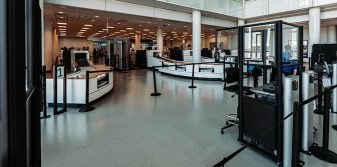
  • The COBUS SCAN 3000 facilitates the screening of baggage and each passenger is also screened via a walk-through metal detector. The process is designed to provide the same service as the terminal security checkpoint, providing a primary or secondary layer of security, as well as saving infrastructure costs.

    Mobile screening units: an evolution of the security checkpoint

    The Canadian Air Transport Security Authority (CATSA) recently ordered nine Mobile Screening Units (MSUs) from German company Contrac for deployment at undisclosed Canadian airports in time for next year’s Winter Olympic Games. The company’s flagship buses have been adapted to enable passengers to be security cleared on their way to the aircraft. Louise Driscoll reports.

  • dd

    Smiths Detection announces TSA order

    Smiths Detection earlier this month announced a $21.9 million (€15m) order from the TSA to supply portable liquid detection scanners for its Bottle Liquid Scanner (BLS) programme. The RespondeR BLS detectors, based on Smith Detection’s RespondeR RCI scanner, are tailored to meet specific TSA requirements.

  • dd

    Airline capacity at European airports down just 2% in early winter

    Analysis of schedule data provided by the world’s airlines to OAG reveals that seat capacity at Europe’s over 600 airports at the beginning of the winter season is down just 2% versus the same period last year. Contained within this modest reduction are significant variations by airline, airport and country.

  • Cassotis: “There has been a dramatic shift in the growth of the low-cost carriers who have entered into new markets and provided new business opportunities. It has opened up new airports that weren’t previously open.”

    Evolution of the ground handling market

    Ahead of her presentation at the 11th ACI EUROPE Ground Handling and Airport Charges Conference, taking place at Airport Exchange, Christina Cassotis, VP and head of airports for aviation consultancy firm SH&E, previewed her assessment of the ground handling market. Louise Driscoll reports.

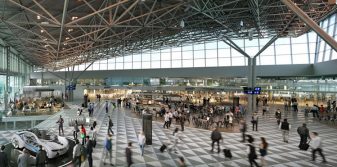
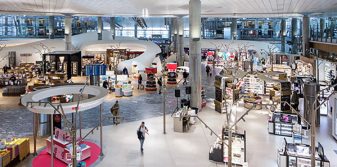
  • The opening of the ‘via Helsinki Spa and Wellness Centre’ in December will mark the final phase opening of the long-haul area in Helsinki’s Terminal 2 extension.

    Helsinki-Vantaa’s ‘via Helsinki’ strategy

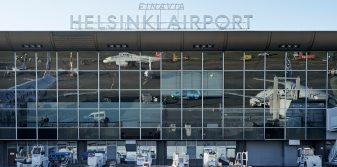
    After three years in development, two of Finavia’s biggest investment projects are nearing completion at Helsinki-Vantaa airport: an extension to the newly-named Terminal 2 and a state-of-the-art baggage handling centre. Both elements are designed to fulfil the “via Helsinki service concept” and serve its vision of growing long-haul transfer traffic. Louise Driscoll reports.

  • ALSTEF signed a 20-year contract with ADM (Montréal Airport) in September for the operation and maintenance of its new US departures area. The contract covers the whole baggage handling process.

    ALSTEF signs 20-year ADM contract

    On 15 September 2009, ALSTEF signed a 20-year contract with ADM (Montréal Airport) for the operation and maintenance of its new US departures area.

  • Mauel: “One measure we are increasing to reduce noise is the use of ground power units (GPUs) at parking stands through collaboration with airlines.”

    Frankfurt: balancing expansion with noise emissions

    For any airport, an ongoing commitment to monitoring and reducing the impacts of operational noise on local communities can only be achieved through close collaboration with air transport stakeholders. Louise Driscoll asked Stefan Mauel, Fraport’s head of infrastructure, about Frankfurt airport’s cooperative efforts on noise abatement measures in the context of its €4 billion Airport Expansion Programme (AEP).

Subscribe to our newsletter

From the latest issue

About ACI EUROPE Airport Business
ACI Europe Events

Popular Stories

Airside Safety Surveys

Airport Business Special Reports