
Categories
ACI EUROPE Airside Safety Survey 2010
The 2010 survey of ACI EUROPE member airports is a comprehensive guide to airside operations. The data yields common trends and distinguishes the different airside practices in areas such as winter services, friction testing, crash fire rescue, FOD detection, bird control and safety management systems.
Airfield & Winter Services Articles
-
October, 2012
How reliable are runway friction testers in extreme weather conditions?
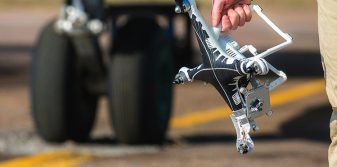
Airport Business examines the reliability of runway friction testers in extreme weather conditions and what can be done to further enhance testing in such scenarios. Ross Falconer spoke with Paul Fraser-Bennison, Aerodrome Standards Officer, Safety Regulation Group, UK CAA, and Armann Norheim, Rapporteur, ICAO Friction Task Force.
-
October, 2012
London-Gatwick’s airfield investment
The latest stage of London-Gatwick’s Capital Investment Programme is centred on significant upgrades to the airfield, including the complete refurbishment of the world’s busiest commercial runway. Ryan Ghee visited the site, where he discussed the project with Derek Hendry, the airport’s Construction Director.
-
June, 2012
Winter preparations
Following the inclement weather conditions experienced across Europe during recent winters, airports will soon be starting the procurement process for 2012/13. Here, we preview some of the latest equipment from suppliers that will be helping airports remain safe and operational during the winter months.
-
October, 2011
Harmonising runway friction standards
Circular 329 on Runway Surface Friction Condition Assessment, Measurement and Reporting was released earlier this year as a result of a joint effort by regulators, airports, airlines, and pilots associations, as well as aircraft manufacturers. Ryan Ghee discussed the contents of the Circular with Joseph Cheong, technical officer, Aerodromes Section, Air Navigation Bureau, International Civil Aviation Organization (ICAO).
-
October, 2011
Airfield upgrade taking shape at Warsaw Chopin Airport
A significant milestone was reached in the ongoing development of Warsaw Chopin Airport in August with the completion of the upgrade of Runway 1, and the airport is now preparing for the installation of a CAT III Instrument Landing System (ILS). Ryan Ghee reports.
-
June, 2011
BAA Ltd Airside Operations Training
In the dynamic and fast-paced world of Airside Operations, you rely on highly trained and professional staff to manage and deliver a safe, efficient operation. Leading airports recognise the importance that training plays in delivering technically competent staff capable of fulfilling this role.
-
June, 2011
Clearway Airport De-icers
Kemira is the sole manufacturer and marketer of the Clearway branded range of products. Clearway is acknowledged as a market leader in airport de-icers, and the product range has been developed to include both acetate and formate-based liquids, along with a complementary solid product range.
-
June, 2011
De-icing technology
Proviron has established itself as a reliable supplier of environmentally friendly formate- and acetate-based runway deicers. All of its SMI approved products are considered safe for the environment, whilst having an outstanding efficiency for anti- and de-icing of run- and taxiways. Proviron is constantly working on optimisations for the products, and is now proud to present its latest development: Provifrost KF ECO, a 100% azole free, potassium formate de-icer.
-
June, 2011
Finavia’s winter strategy
A typical winter in Helsinki can see snow up to half a metre deep and temperatures of -10°C. However, in Finland, the airports stay open in spite of extreme snowfall and sub-zero temperatures. So, how is this achieved?
-
January, 2011
Airfield redevelopment central to Mumbai Airport upgrade
Mumbai’s Chhatrapati Shivaji International Airport (CSIA) is currently undergoing a major renovation and following the recent opening of a new domestic terminal and the redevelopment of the secondary runway, a nine-month reconstruction of the main runway is currently ongoing. Ryan Ghee reports.
-
January, 2011
Italian airports favour TrackJet System
Increased demand in Italy for the TrackJet System is being reported by its German manufacturer, Weigel, particularly when rubber deposits or paint markings need to be removed from airport runways. One such example is the runway at Cagliari, which was cleaned for the first time in May this year. The resulting friction values of over 0.8 and the efficient, trouble-free performance of the system elicited abundant praise from the engineers at the airport.
-
October, 2010
Airport operators highlight importance of airside safety strategies
Bird strike prevention and risk management methods are integral to the everyday operation of any airport and the aviation industry is constantly exploring new innovative techniques to increase the safety of airside operations. Ryan Ghee asked Stefan Mauel, head of infrastructure airside, Traffic and Terminal Management, Airport Expansion, Fraport, and Ian Witter, head of policy and standards, BAA, about their airside strategies.
-
October, 2010
Scarecrow Releases Ultima v3
SCARECROW ULTIMA V1, the effective bird and wildlife dispersal and data analysis system was first released in 2008, receiving acclaim from major airport operators around the world for creating a real time audit of dispersal procedures.
-
October, 2010
TONI Bird Control Solutions
Bird strike prevention is an important aspect of risk management at every airport. More and more airports nowadays take an integrated approach to reduce bird strikes. With the use of modern radar technology, birds can be detected long before they become a hazard to aircraft landing or taking off. Modern software automatically analyses their flight path and warns the tower when a collision is likely. The Merlin Radar has been introduced this year at Riga International Airport and many other airports across the globe.
-
October, 2010
Bird Strike Management System
Bird Control Italy srl has developed a unique software system to assist airports with bird dispersal and risk assessment.
-
July, 2010
ICAO’s Task Force seeking runway friction harmonisation
The International Civil Aviation Organisation’s (ICAO) Friction Task Force is currently applying the finishing touches to revising the global provisions on runway surface friction measurement and reporting. Ryan Ghee spoke to Joseph Cheong, technical officer, Aerodromes Section, Air Navigation Bureau, ICAO.
-
July, 2010
Winter services and wildlife management
Winter services and the detection of Foreign Object Debris (FOD) are two critical areas of airport operation and following the harsh weather conditions that were experienced across much of Europe last winter, the planning process is already well underway for the 2010/2011 winter season. Ryan Ghee reports.
-
July, 2010
Radar technology dramatically improves runway debris detection
Two of the most dramatic aviation incidents in recent years have highlighted the dangers posed to airlines by bird strikes and runway debris. The Concorde tragedy of 2000 in which 113 passengers were killed, was caused by a titanium strip, no larger than a school ruler, which lay undetected on the runway. This strip burst Concorde’s rear tyres, fragments of which subsequently punctured the aircraft’s fuel tank causing a catastrophic explosion.
-
October, 2009
Solar power: the next safe solution for runway lighting?
Efficiencies in solar and solar LED lighting – widely used at military and remote airfields – continues to advance and support a growing number of commercial airports for specific runway applications. Louise Driscoll spoke to a UK airport using the technology, an airline pilot and a leading supplier of solar power to assess how it could light the way to enhancing safety at airports.
-
October, 2009
Runway friction standards: finding a workable solution
Developing standards for assessing levels of runway friction is still a work in progress. ICAO’s International Friction Task Force and the FAA’s Takeoff and Landing Performance Assessment Aviation Rulemaking Committee (TALPA ARC) are currently engaged in standardising condition reporting towards the ICAO designations of good/medium/poor/nil runway condition assessments. Louise Driscoll reports.