

Categories

January 2009 Articles

  • Dealing with today while planning for tomorrow

    Dealing with today while planning for tomorrow

    As 2008 draws to a close, the forthcoming year is looking pretty bleak for airlines and airports alike. As European countries have been injecting billions of euros in their faltering banking systems in the hope of calming down financial markets and preventing the collapse of their economies, an increasing number of European airports have reported falling passenger and freight traffic figures over the last months. Although uncertainty is the order of the day and making accurate traffic forecasts is like reading a crystal ball, the magnitude of this economic crisis means that the downward trend will further accelerate in the coming months. Let’s face it, 2009 is set to be some sort annus horribilis for aviation.

  • Tajani: "The 'capacity crunch' that we face on the ground and in the sky is part of the ‘challenge of growth’ that we face; a challenge that is fundamentally about the industry's – and Europe's – competitiveness."

    Tajani committed to Single European Sky and sustainable air transport

    Appointed last June, European Commission Vice-President Antonio Tajani had to pick up the Transport portfolio at an extremely important time. The critical tasks ahead are numerous and include working towards more sustainable transport, ensuring safe transport and passenger rights, while Tajani’s first initiative as Commissioner for Transport was the relaunch of the Single European Sky (SES II). Ross Falconer reports.

  • One of the five Challenges highlighted in EUROCONTROL’s newly released 2008 study is environmental impact; difficult trade-offs will be required – and these are not just between growth and environmental impact but also between CO2 emissions, noise and local air quality.

    Latest Airport capacity warning yields active response

    In the closing quarter of what has been a very difficult year for aviation, all sides are looking for efficiency gains, with a view towards optimising capacity, reducing fuel consumption and lowering emissions. A cooperative agreement between EUROCONTROL and ACI EUROPE was formalised at ACI EUROPE’s Airport Exchange event in Berlin in October, committing the two organisations to work together to address airport capacity issues, with an initial focus on Airport-Collaborative Decision Making. Simultaneously, EUROCONTROL announced the results of its authoritative Challenges of Growth study, which confirms that, notwithstanding the present crisis, Europe continues to face an airport capacity crunch. Less than a week later, the EU Observatory on Airport Capacity held its very first meeting. Ross Falconer reports on how conversation is switching to action.

  • François Rubichon, Deputy CEO, AdP: “Our passengers will be offered new travel opportunities on destinations served by only one platform and increased frequencies on common destinations.”

    Visionary airport alliance to increase competitiveness and efficiencies

    Aéroports de Paris (AdP) and Schiphol Group have created an alliance under which they have entered into a long-term industrial cooperation and 8% cross-shareholding agreement, which is designed to improve competitiveness. François Rubichon, Deputy CEO, AdP and Ad Rutten, Executive Vice President and COO, Schiphol Group, explained the strategic rationale to Ross Falconer.

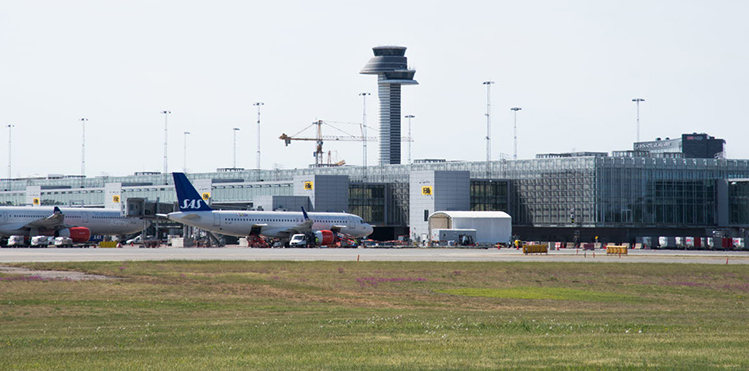
  • “It has certainly been a strength to be able to show the airlines that charges have been lowered in several consecutive steps. The ‘visit cost’ reduction has also made it possible to attract price-sensitive airlines, who would otherwise not have been able to take the risk of establishing themselves at the LFV airports,” said Kerstin Lindberg Göransson, managing director, Stockholm-Arlanda.

    That LFV edge – reducing charges, stimulating traffic

    Sweden’s LFV Group has implemented a step-by-step reduction of airport charges over the last four years. Most recently, it applied a 9% reduction in charges at three of its airports – Stockholm-Arlanda, Stockholm-Bromma and Göteborg Landvetter – on 1 November. Kerstin Lindberg Göransson, managing director, Stockholm-Arlanda and Mats Sigurdson, vice president aviation marketing, LFV Airports, outlined the strategy to Ross Falconer.

  • On the EU ETS, French State Secretary for Transport Dominique Bussereau concluded that the inclusion of aviation in the mechanism is essential if ambitious aims for pollution reduction are to be achieved.

    European Aviation Summit addresses environmental sustainability

    This year’s European Aviation Summit was held in Bordeaux on 17-19 November, at the initiative of the French Presidency of the European Union. The event took particular account of the effects of the current financial crisis and economic slowdown, but the focus remained fixed on aviation’s interaction with the EU’s climate change priority. Ross Falconer reports.

  • Malta International Airport is participating in the development of the ACI EUROPE Carbon Accreditation Scheme. The proposed scheme enables airports to implement carbon management processes and gain public recognition of their achievements through the attainment of accreditation at different scheme levels.

    Malta International Airport committed to carbon management

    Malta International Airport’s environmental strategy is focused on incremental improvements beyond what is required by legislation. It is proactive in terms of improving its environmental management and is actively participating in the development of the ACI EUROPE Airport Carbon Accreditation Scheme. Martin Dalmas, technical services manager – airfield, explained the airport’s environmental vision to Ross Falconer.

  • Arora: “The new terminal will be state-of-the-art – it will have 78 aerobridges and over 100 travelators. The terminal will be connected to the city through high speed Metro.”

    Delhi’s strategy to modernise for 2010 Games

    The recent opening of a new, third runway at Delhi’s Indira Gandhi International Airport, upgrading works and the construction of a new terminal form part of a major investment programme for expansion of the airport to 2010 by Delhi International Airport Limited (DIAL) under the GMR-led consortium. Master planners HOK, Mott Macdonald and Frischmann Prabhu are involved in the concept and schematic design for the new Terminal 3 and the refurbishment of the existing International Terminal. Arun Arora, a GMR Group representative and Richard Spencer, HOK’s director of transportation, informed Louise Driscoll about progress so far.

  • The 7120 million new terminal has been designed to handle 2.7 million passengers per year. It is a significant expansion on the old facility, which has a capacity of one million passengers and limited capability to cope during peak periods. Throughput this year is forecast to grow 0.4% to 1,751,000 passengers.

    New Pafos terminal heralds ‘a new era for tourism in Cyprus’

    The new Pafos International Airport opened on 8 November. The 18,000sqm single storey terminal building has been designed to keep its operation simple and cost effective through optimum use of the latest technology, as general manager Olivier Baric explained to Ross Falconer.

  • Jefferson: “44% of passengers coming to this airport do so on public transport, which places us ahead of other UK airports. We have developed an effective transport forum and are getting positive feedback from the local community and stakeholders.”

    London-Stansted’s commitments to environmental management

    Stansted’s environmental credentials have been widely recognised in 2008 – now the UK’s largest airport to be re-accredited with ISO14001 certification, with a leading position for the proportion of passengers using its public transport connections. Dr Andy Jefferson, head of environment, talks about his pledge for continued cooperation within the industry and how the airport is striving to maximise its green performance – set against the challenges of increasing passenger numbers. Louise Driscoll reports.

  • The growth of low-cost carriers, which generally demand a different level of service from airports, is creating the need for new and more cost-effective terminal design solutions and for alternative approaches to setting user charges.

    Training for the aviation industry

    Cranfield University short courses offer solutions to the complex challenges facing the aviation industry.

  • UFIS-AS also premiered its persons with reduced mobility (PRM) solution in 2008. A special version of the UFIS Resource Manager is now available, designed to help airports meet the requirements within the European Union to provide services to PRMs. Task allocation to the people providing the service is carried out using PDAs and WLAN access.

    UFIS-AS: supporting airport operational management

    UFIS Airport Solutions (UFIS-AS) already has a wide base of customers and an extensive range of systems installed in more than 25 of the world’s leading and busiest airports. At the same time, it is also looking to the future and is working continuously on updating its technology to offer IS/IT managers the most efficient and beneficial solutions it can.

  • The Wheelbox is available with any multiples of pods, and with space-saving double-capacity pods (folded chairs) for secure and storage areas.

    bagport chooses Wheelbox system

    The bagport Group, a provider of automated trolley services to many airports, including London-Luton, Bristol, Stockholm, Boston and Philadelphia, has chosen to use the Wheelbox automated wheelchair dispensing system as part of its PRM service – AssistPort.

Subscribe to our newsletter

From the latest issue

About ACI EUROPE Airport Business
ACI Europe Events

Popular Stories

Airside Safety Surveys

Airport Business Special Reports